
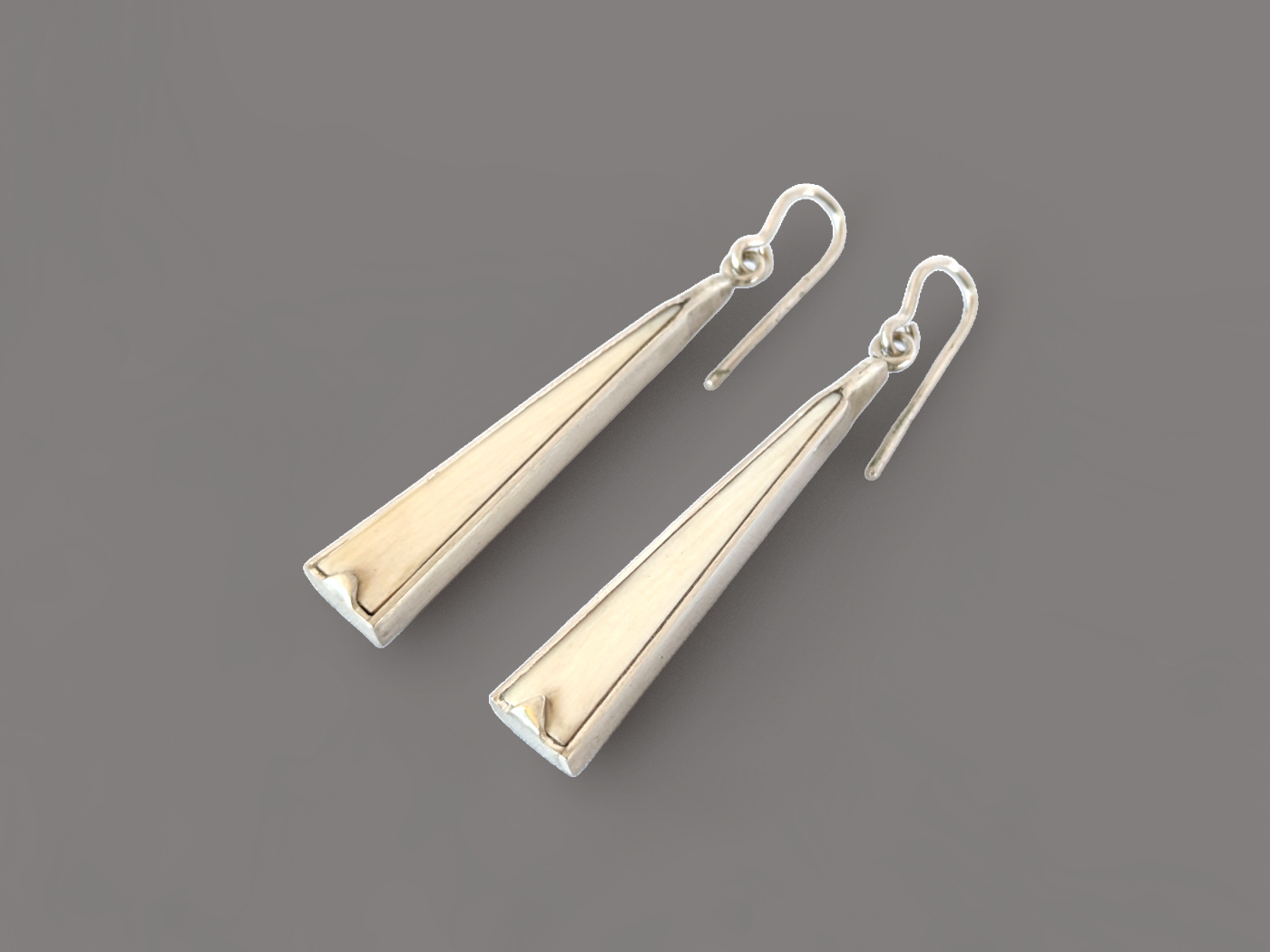
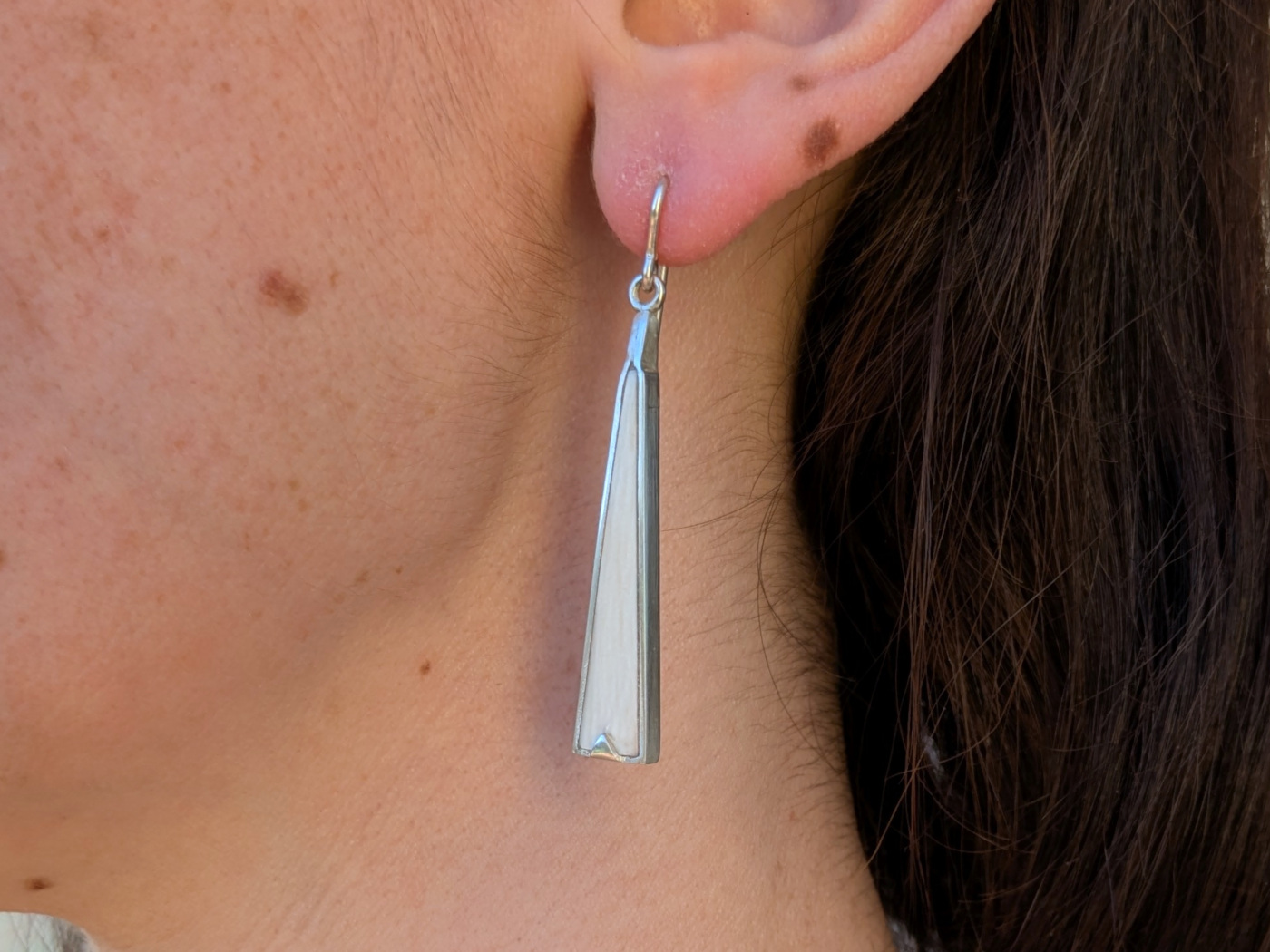
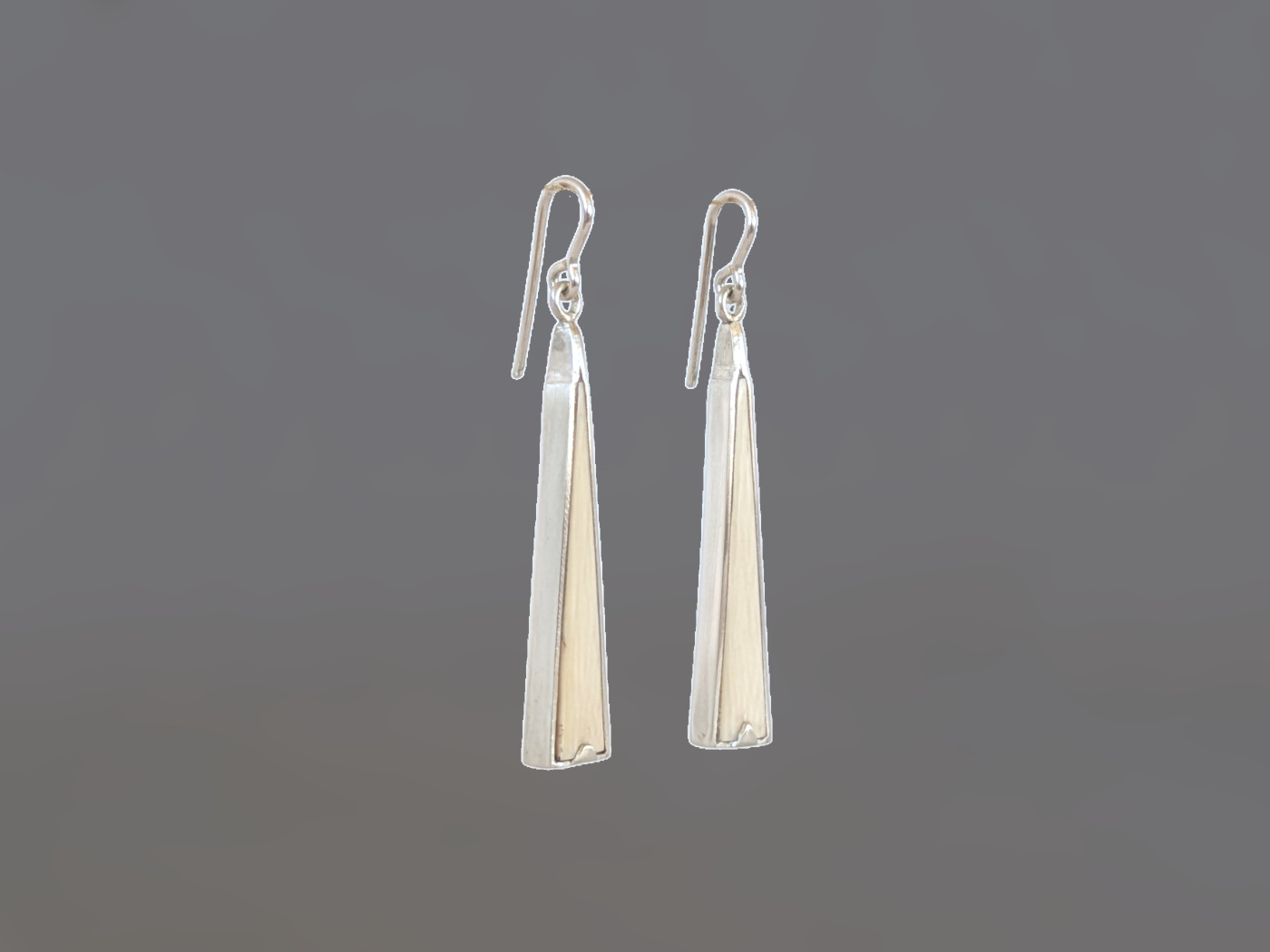

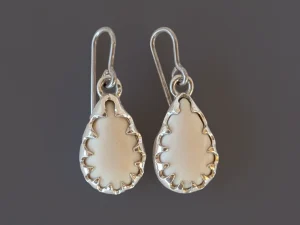
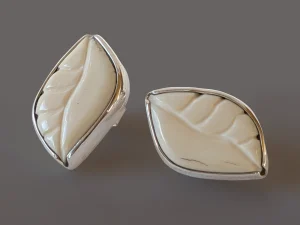
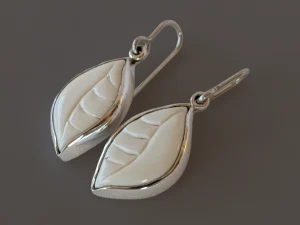
MAMMOTH IVORY

HARDNESS: 2 – 3
DENSITY: 1.70 – 2.00 g/cm³ (typically around 1.77 g/cm³ for unweathered dentine; increases slightly if heavily mineralized).
SCRATCH: 2.0 – 2.5 on the Mohs scale (up to ~2.8–3.0 in mineralized areas); leaves a white streak.
COLOR: Inner dentine is creamy white to pale yellow; the outer cementum ("bark") ranges from tan, honey, and dark brown (iron/manganese staining) to rare blue or green (vivianite).
BRIGHTNESS: Dull to waxy/greasy luster when unworked, taking a soft, pearly-to-greasy polish; Refractive Index (RI) is 1.52 – 1.54.
EXFOLIATION- FRACTURE: No true mineral cleavage. Exhibits splintery to uneven fracture and concentric exfoliation (delamination along growth rings/Lines of Owen and radial cracks) as it dries or weathers.
CRYSTALLIZATION: Amorphous / fibrous organic-inorganic aggregate. Composed of degraded collagen fibers embedded with nanoscale hexagonal hydroxyapatite crystallites (~20–23 nm).
TRANSPARENCY: Opaque to sub-translucent (thin edges or finely polished slices show slight translucency).
LUMINESCENCE: Weak to moderate bluish-white or violet-blue under UV light (typically stronger under long-wave UV than short-wave UV). Heavily fossilized or dark mineral-stained bark often appears inert.
Mammoth ivory is a biological composite (dentine) rather than a single crystalline mineral, so its physical and optical properties fall within tight diagnostic ranges rather than single fixed values. Mammoth ivory is dentine recovered from the tusks of extinct mammoths (Mammuthus), typically preserved for 10,000 to over 200,000 years in permafrost or soil across Siberia, Alaska, and northern Canada. Because mammoths are extinct, mammoth ivory is generally not listed under CITES like modern elephant ivory, though customs authorities enforce strict verification to prevent illegal elephant ivory from being disguised as mammoth ivory. Since the ban, a fortunate but insufficient measure, of trading in elephant ivory, the use of mammoth ivory has increased. The two types of ivory can be differentiated thanks to the drawings they present in the fangs (Schreger lines).